Mauritania
Mauritania occupies a prominent place in the history of the Tijaniyya path. It became one of the major scholarly centers from which the tariqa was transmitted, consolidated, and radiated across vast regions, particularly toward sub-Saharan Africa. This influence is largely linked to the exceptional stature of Sidi Mohamed Hafez al-Chenguiti, one of the most important figures of the Tijani path in that region, through whom a great number of scholars, spiritual masters, and seekers received the teachings of the Tijaniyya.
Around him developed a genuine intellectual and spiritual environment marked by scholarship, transmission, and spiritual education. Numerous works, commentaries, epistles, and poems were produced in the Chinguitt scholarly milieu, reflecting both the doctrinal depth of the path and its firm rooting in a culture of knowledge, devotion, dhikr, and religious service. Through his disciples and the disciples of his disciples, the tariqa experienced remarkable expansion, reaching not only the scholarly tribes of Chinguitt but also countless disciples coming from the regions of sub-Saharan Africa.
Sidi Mohamed Hafez ibn Sidi al-Mukhtar ibn Hbib ibn Ikrish al-Alawi al-Chenguiti stands among the greatest figures of this heritage. Raised in an environment of piety, discipline, and integrity, he memorized the Qur’an at a very young age and distinguished himself by a life of purity, constant devotion, and a firm determination to pursue knowledge despite early difficulties caused by family responsibilities. His intellectual formation was characterized by lofty aspiration, uncommon perseverance, and remarkable intelligence, allowing him to catch up with and surpass many of his contemporaries.
During his journey toward the Hijaz, he passed through Fez, where God opened for him the door of meeting the Shaykh Sīdī Aḥmad al-Tijānī. This meeting proved decisive. He stayed with him in the blessed zawiya of Fez, receiving spiritual training, elevation, knowledge, and secrets, and witnessing remarkable moments that left a deep impression upon him. Among these was the dictation of Jawahir al-Ma‘ani by the Shaykh to his disciple Sidi Ali Harazem.
When he prepared to return to his homeland, the Shaykh granted him a clear authorization to transmit the wird, to teach the path according to its conditions, and to appoint under his authority a limited number of muqaddams when necessity required it.
Upon returning to his country, Sidi Mohamed Hafez initially devoted himself to teaching knowledge and composing useful works while observing the reserve recommended by his master. Yet the time of manifestation eventually arrived. The path began to spread through him in a striking manner, expanding widely throughout Mauritania and beyond. The sources emphasize that although others may have previously carried something of the path, none before him had unfolded it in those regions with such breadth. Thus he became one of the central pillars of Tijani expansion in West Africa.
Among the most illustrious of his disciples were Sidi Mouloud Fall, a towering spiritual and scholarly figure, and Hassan al-Tariqa, Sidi Mohamed ibn Abdallah al-Alawi al-Chenguiti. His influence also reached his own household, especially his wife, Sayyida Fatima, a woman of spiritual insight and knowledge, whom he counted among those authorized to transmit under his authority. Their household thus became one of the places where the heritage of the path continued to flourish both in knowledge and in sanctity.
Sources also report numerous manifestations of divine favor associated with him, though never presented as an end in themselves, but rather as signs of the grace granted by Allah to one of His sincere servants. His life thus appears as a harmonious union of knowledge, spiritual education, transmission of the wird, intellectual production, and human influence. He passed away in the year 1245 AH after a life entirely devoted to knowledge, training, and the dissemination of the path.
Around this central figure gravitated a considerable number of Chinguitt scholars who were themselves prominent representatives of the Tijaniyya. Among them were Sidi Sa‘id ibn Sidi al-Mukhtar ibn Hbib ibn Ikrish al-Alawi al-Chenguiti, Sidi Mohamed ibn Mohamed al-Saghir known as Ibn Anbouja al-Chenguiti al-Tichiti, Sidi Ahmed al-Saghir al-Chenguiti al-Tichiti, Sidi Ahmed Ham ibn al-Abbas al-Alawi al-Chenguiti, Hassan al-Tariqa Sidi Mohamed ibn Abdallah al-Alawi al-Chenguiti, Sidi Mouloud Fall ibn Mohamed al-Ya‘qoubi al-Chenguiti, Sidi ‘Ubayda ibn Sidi Mohamed al-Saghir al-Chenguiti, Sidi Baba ibn Ahmed Beib al-Alawi al-Chenguiti, and Sidi Mohamed al-Hanafi ibn al-Abbas al-Alawi al-Chenguiti. All are described as men of knowledge, devotion, worship, dhikr, and closeness to God.
Thus Mauritania appears not merely as a land where the Tijani path arrived, but as one of its great scholarly and spiritual centers. It became a land of masters, poets, jurists, educators, and saints whose combined efforts strongly contributed to the rooting and expansion of the path throughout West Africa.
Finally, Mauritania was distinguished not only by the abundance of its Tijani scholars, but also by the close relationships that connected its great figures with Moroccan scholars of the early generations of the path. One notable example is the relationship between Sidi al-Arbi ibn al-Sayih and prominent Chinguitt scholars, notably Sidi ‘Ubayda al-Chenguiti and his brother Sidi Mohamed al-Saghir. These relationships reflect the deep unity of the Tijani scholarly network linking Morocco and Bilad Chinguitt, based on correspondence, transmission, mutual esteem, and the sharing of the sciences of the path.
In the same context one may also mention the connections maintained by Sidi Mohamed ben Ahmed Akensous with scholars of that region. In the following generation this continuity appeared again with the scholar Sidi Ahmed Skiredj, who likewise maintained strong relations with several Chinguitt scholars, including Sidi Mohamed ‘Ale al-Chenguiti and others. In this way, Mauritania and Morocco together formed within the history of the Tijaniyya a dense space of scholarly, spiritual, and human exchange.
Linked figures
(0)Linked books
(0)Linked articles
(0)Bibliographic references
(2)These references are explicitly associated with this region in the documentary world map materials.
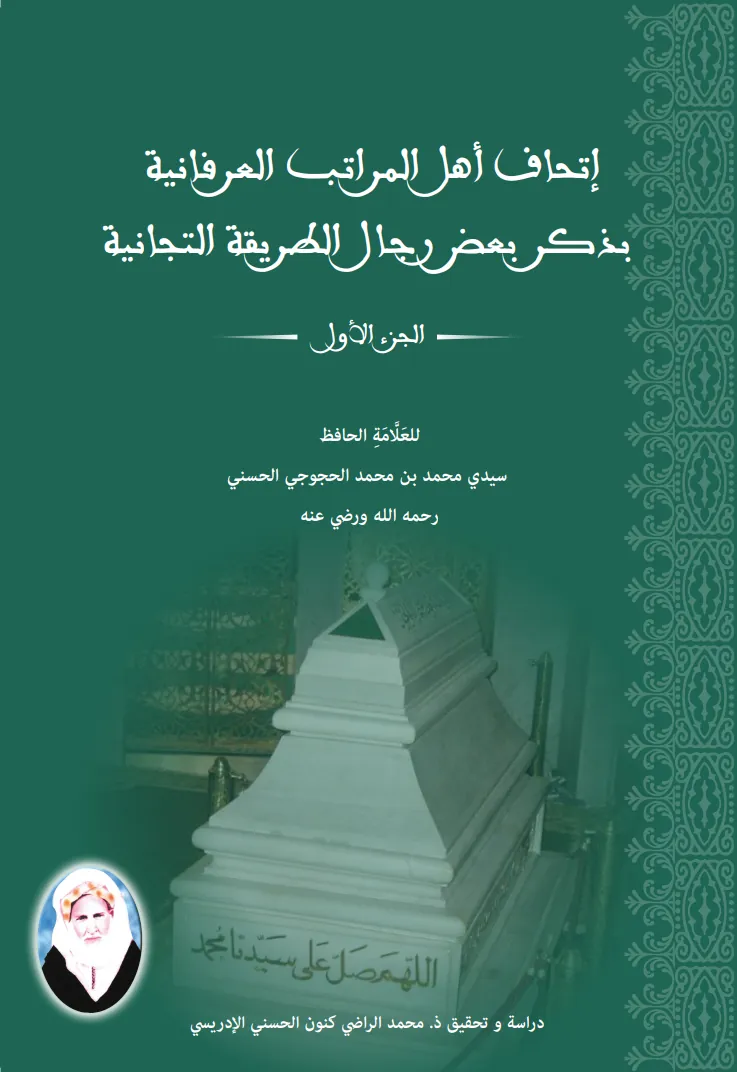
إِتْحَافُ أَهْلِ المَرَاتِبِ العِرْفَانِيَةِ بِذِكْرِ بَعْضِ رِجَالِ الطَّرِيقَةِ التِّجَانِيَّةِ (8 أجزاء)
إِتْحَافُ أَهْلِ المَرَاتِبِ العِرْفَانِيَةِ بِذِكْرِ بَعْضِ رِجَالِ الطَّرِيقَةِ التِّجَانِيَّةِ (8 أجزاء)
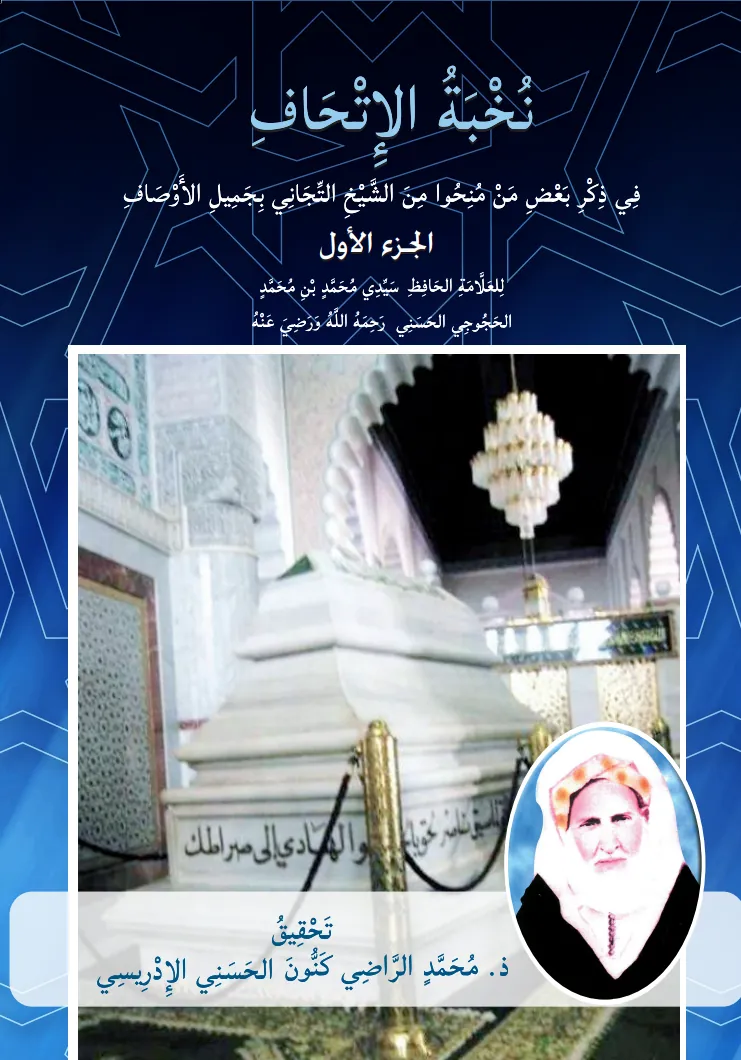
نُخْبَةُ الإِتْحَاف (التوم الأوّل)فِي ذِكْرِ بَعْضِ مَنْ مُنِحُوا مِنَ الشَّيْخِ التِّجَانِي بِجَمِيلِ الأَوْصَافِ
نُخْبَةُ الإِتْحَاف (التوم الأوّل)فِي ذِكْرِ بَعْضِ مَنْ مُنِحُوا مِنَ الشَّيْخِ التِّجَانِي بِجَمِيلِ الأَوْصَافِ