Sudan: a major center of the Tijaniyya and a land of deep connection with Sidi Ahmed Skiredj
Sudan was one of the major centers of the Tijaniyya in Africa. It witnessed the rise of many great shaykhs, muqaddams, and scholars who played a major role in rooting, teaching, and spreading the path across its regions. This spiritual growth was closely connected to Sidi Ahmed Skiredj, the great Moroccan scholar, who maintained strong ties with Sudanese Tijani figures through correspondence, mutual authorizations, scholarly exchanges, and spiritual guidance.
Among the most prominent of these figures were Sidi Mudathir, his son Sidi Majdhoub, the great shaykh Sidi Marzouk, Sidi Abdulaziz Debbagh and his family, Sidi Tayeb Mouna, and others who all contributed to the spread of the Tijaniyya and the establishment of its zawiyas throughout Sudan.
Sidi Mudathir: one of Sidi Ahmed Skiredj’s closest beloveds in Sudan
The faqih, scholar, man of letters, and renowned muqaddam Abu Muhammad Afandam al-Mudathir ibn Ibrahim ibn al-Wali Sidi Muhammad al-Hijazi was among the closest beloveds of Sidi Ahmed Skiredj in Sudan. Their relationship was profound and marked by affection, reverence, and mutual spiritual benefit.
Sidi Ahmed Skiredj himself recalled their meeting inside the Kaaba on Friday morning, 2 Dhu al-Hijja 1334 AH, describing it as one of the sacred spiritual breezes he experienced in the sanctuary of Mecca. In that noble place, they sealed a brotherhood in God and exchanged ijaza. Sidi Ahmed Skiredj described that authorization as one of the most important of ijazas, full of hope, blessing, and spiritual promise.
Their preserved letters reflect the depth of this bond, the refinement of their language, and Sidi Mudathir’s reliance on Sidi Ahmed Skiredj for guidance and direction. After Sidi Mudathir passed away in 1356 AH, he was mourned by major Sudanese and Tijani scholars, including Sidi Marzouk and Sidi Ahmed Skiredj himself.
Sidi Majdhoub: continuity of a household of knowledge and transmission
Sidi Majdhoub, the son of Sidi Mudathir, appears as an heir to this household of scholarship and service to the path. His presence alongside his father, and his place within this wider Sudanese Tijani scholarly environment connected to Sidi Ahmed Skiredj, illustrates the generational continuity that strengthened the Tijani presence in Sudan.
The great shaykh Sidi Marzouk: scholar, educator, and founder of institutions
Sidi Marzouk ibn Hasan ibn Muhammad ibn Abd al-Salam al-Ansari was one of the great Maliki scholars of Sudan and one of the leading Tijani figures in the country. Born around 1307 AH / 1889 CE, he memorized the Qur’an early and then devoted himself to the study of the religious sciences.
His attachment to the Tijaniyya deepened through his reading of al-Rimah by Sidi Omar Fouti, which profoundly influenced him. He later met Sidi Ahmed Skiredj, who granted him an absolute ijaza in the path.
After settling in Omdurman in 1344 AH / 1926 CE, he established a khalwa for Qur’an memorization and religious instruction. In 1360 AH / 1941 CE, he also founded an institute for Qur’anic studies and hadith sciences, along with a Tijani zawiya that later became a mosque in which Friday prayer was held and the sciences of religion were taught.
He authored several important works and died in 1370 AH / 1951 CE, being buried in his mosque in Omdurman. His legacy reflects the institutional, educational, and spiritual strength of the Tijaniyya in Sudan.
Sidi Abdulaziz Debbagh: a privileged disciple and major correspondent
Sidi Abdulaziz Debbagh of Omdurman was one of the distinguished muqaddams qualified to transmit the Tijani awrad in Sudan. He shared very strong ties with Sidi Ahmed Skiredj, being described as both his disciple and his intimate companion.
Their correspondence was extremely abundant. It was said that if gathered, it would fill a large volume. Some of Sidi Ahmed Skiredj’s writings were in fact composed as direct responses to the questions and requests of Sidi Abdulaziz Debbagh. Among them were Zahr al-Afanin fi al-Jawab ‘an al-As’ila al-Thalathin, al-Nafha al-‘Anbariyya fi al-Ajwiba al-Sukayrijiyya, and Risalat al-Balagh, which was addressed to him. This clearly shows his rank within the scholarly and spiritual circle of Sidi Ahmed Skiredj.
Sidi Tayeb Mouna: deep attachment to the Skiredj chain and spiritual education
Sidi Tayeb Mouna represents one of the clearest examples of Sudanese devotion to the sanad of Sidi Ahmed Skiredj and to his role as spiritual guide, father, and healer of hearts. His letter reveals deep gratitude, full trust, educational surrender, and a strong awareness of belonging to a living spiritual lineage.
He and his companions openly rejoiced in being “Tijani Skiredjis,” meaning disciples attached to this elevated chain of transmission and instruction. His correspondence also includes confessions of inner struggles, requests for reform, and a clear commitment to follow the shaykh’s guidance in awrad, discipline, teaching, and spiritual growth. This makes his testimony especially valuable for understanding how Sidi Ahmed Skiredj helped shape the Sudanese Tijani community.
A wide Sudanese network of scholars, disciples, and zawiyas
Around these major figures stood a broader network of scholars, muqaddams, and disciples, all contributing to the consolidation of the Tijaniyya in Sudan. Through letters, ijazas, legal and spiritual consultations, pedagogical advice, and coordinated efforts, this network helped establish many Tijani zawiyas throughout Sudan, while also promoting the teaching of Qur’an, hadith, fiqh, awrad, and spiritual discipline.
Sudan in the history of the Tijaniyya
Sudan thus emerges as one of the great centers of Tijani expansion in Africa. Its shaykhs and scholars were not merely local transmitters, but builders of institutions, founders of zawiyas, and carriers of enduring chains of instruction and education. Their close relationship with Sidi Ahmed Skiredj gives this history a special depth and highlights the strength of the spiritual and scholarly ties between Morocco and Sudan in the service of the Tijani path.
Linked figures
(0)Linked books
(0)Linked articles
(0)Bibliographic references
(2)These references are explicitly associated with this region in the documentary world map materials.
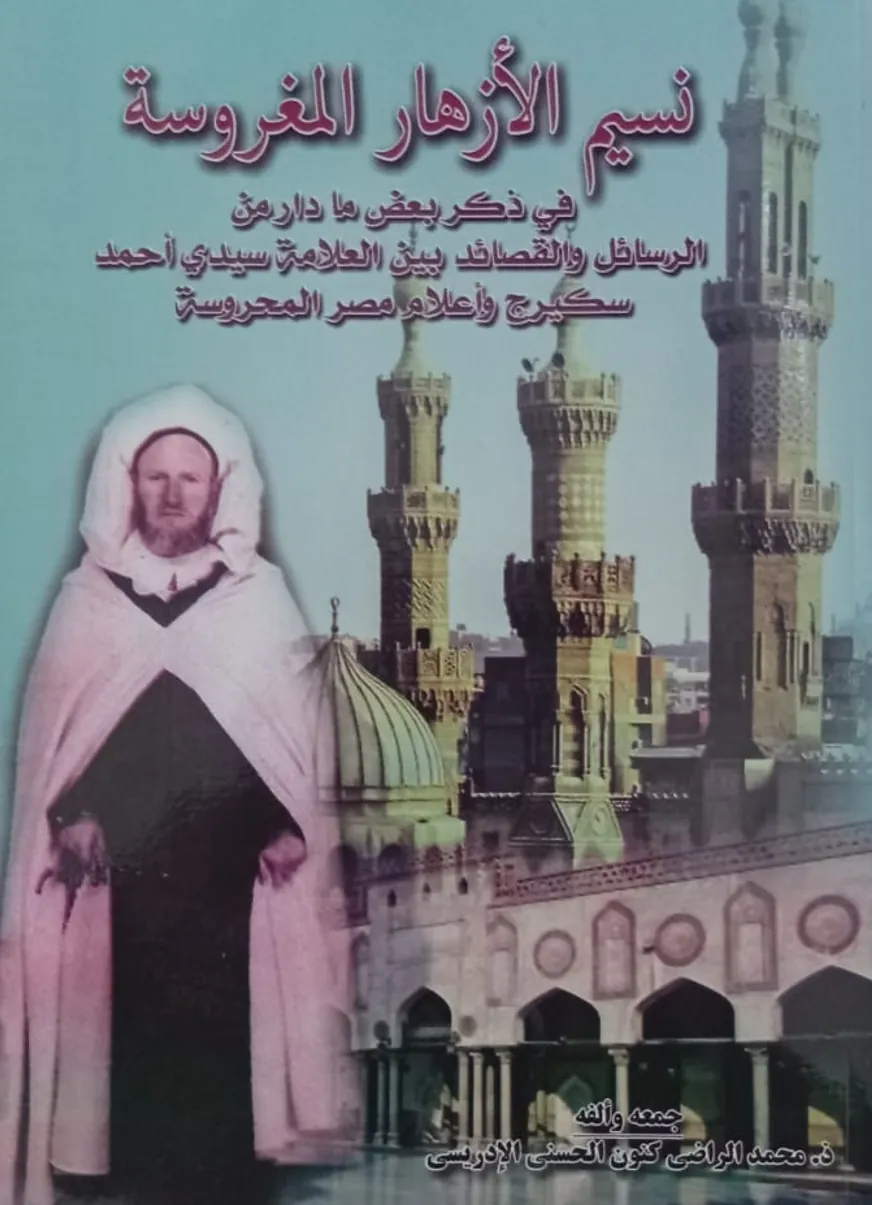
نَسِيمُ الأَزْهَارِ المَغْرُوسَةِ في ذكر بعض ما دار من الرسائل والقصائد بين العلامة سيدي أحمد سكيرج وأهل مصر المحروسة
نَسِيمُ الأَزْهَارِ المَغْرُوسَةِ في ذكر بعض ما دار من الرسائل والقصائد بين العلامة سيدي أحمد سكيرج وأهل مصر المحروسة
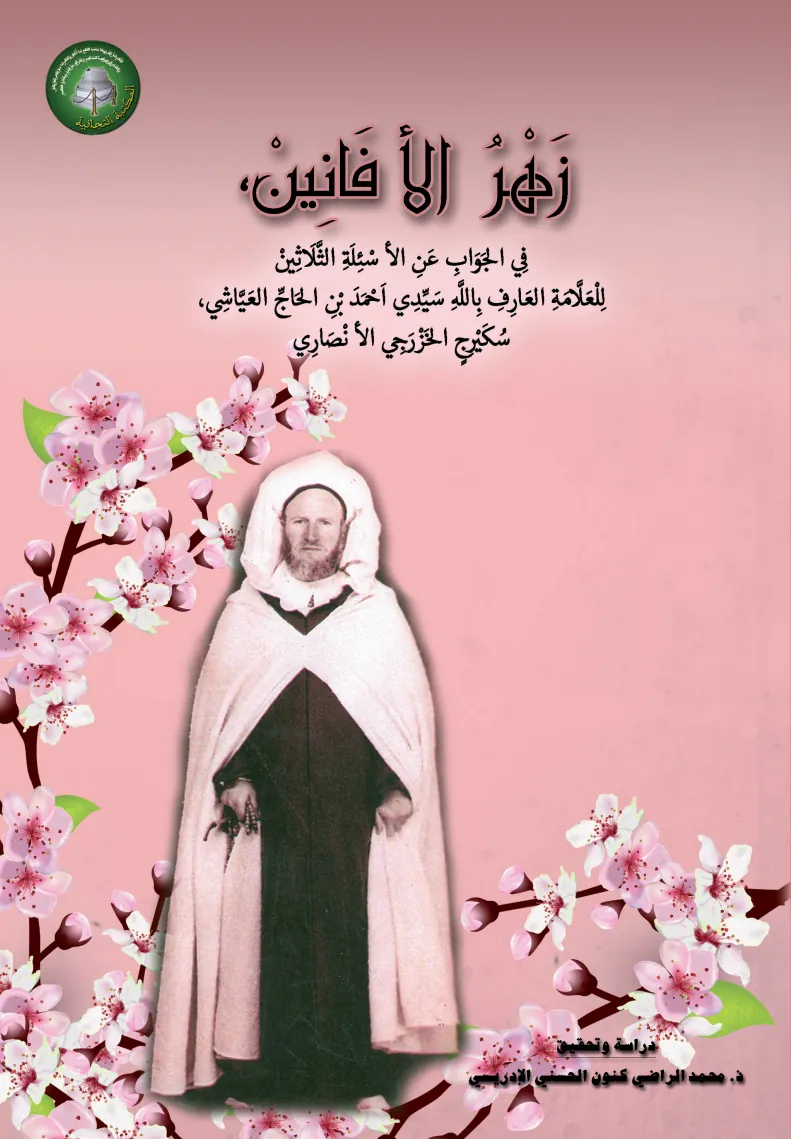
زَهْرُ الأَفَانِينْ،فِي الجَوَابِ عَنِ الأَسْئِلَةِ الثَّلَاثِينْ
زَهْرُ الأَفَانِينْ،فِي الجَوَابِ عَنِ الأَسْئِلَةِ الثَّلَاثِينْ