Skiredj Library of Tijani Studies
Among the great reference works of the Tijani path, Jawahir al-Ma‘ani holds a central place. It is not simply a respected classic. For many seekers, students, and researchers, it is the primary Arabic source for understanding the teachings, transmission, and spiritual framework of the Tijani way. Because of that status, the quality of the text matters greatly. A reliable edition is not a luxury. It is a necessity.
This is precisely why the question was raised: what distinguishes our verified edition of Jawahir al-Ma‘ani from other printed versions published in Beirut, Egypt, and elsewhere?
The answer is straightforward. Our edition was prepared on the basis of a wide and serious manuscript comparison. It was not produced from a single copy, nor from a casual reprint of an already circulating text. Rather, it was established through the study of fourteen manuscript witnesses, including two copies written in the hand of the author himself, the gnostic of God, Sidi al-Hajj Ali Harazem Barrada al-Fasi. Alongside these were other copies linked to some of the most renowned and meticulous scholars of the Tijani path.
Why Jawahir al-Ma‘ani Is the Number One Reference Book of the Tijani Path
A foundational book must do more than preserve words. It must transmit them accurately. In the case of Jawahir al-Ma‘ani, this requirement is even more important because the work occupies such a high place in Tijani learning and practice. A text that serves as a reference for understanding doctrine, adab, spiritual orientation, and the sayings of the Shaykh cannot be treated carelessly.
For that reason, any serious presentation of Jawahir al-Ma‘ani must begin with the question of textual integrity. Not all printed editions are equal. Not all copies reflect the same level of care. And not all reproductions preserve the wording of the original work with the same fidelity.
A Verified Edition Built on Fourteen Manuscripts
Our critical work on Jawahir al-Ma‘ani relied on fourteen different copies. This alone already sets it apart from many printed editions that rest on fewer witnesses or reproduce inherited errors without sufficient مراجعة.
Most importantly, among these fourteen copies were two manuscripts in the hand of Sidi al-Hajj Ali Harazem himself, the author of the book. This gives the edition a level of authority that cannot be overlooked.
In addition, we consulted copies attributed to some of the best-known and most exact scholars of the Tijani tradition, men known for precision, deep understanding, and careful ضبط of the text.
The Major Value of the Copies of Sidi Ahmed Skiredj and Sidi Mohamed Lahjouji
Among the most important witnesses used in the verification process were the copies of two great scholars:
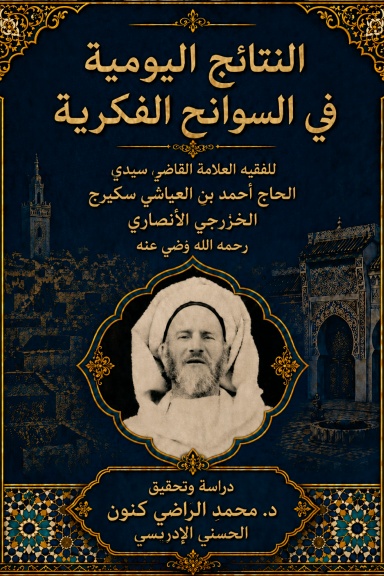
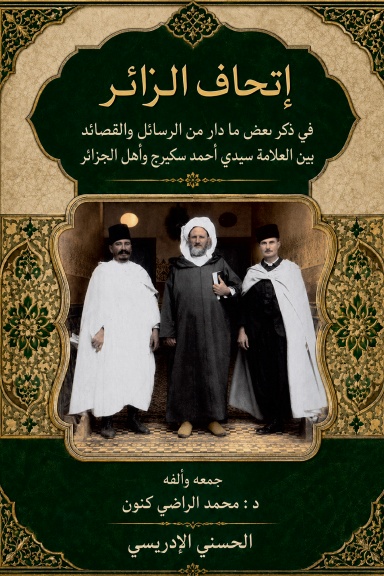
Sidi Ahmed ibn al-Hajj al-Ayyashi Skiredj, the celebrated judge and scholar of his time, and Sidi Mohamed Lahjouji, the well-known memorizer and scholar.
These were not ordinary copies. Both scholars corrected many spelling errors found in earlier manuscripts. They also preserved the proper form of many personal names, place names, and technical terms. Beyond that, their copies contain clear signs of revision, refinement, and careful comparison.
For this reason, these two copies stand, without real rival, as two solid and complementary texts. Any serious researcher working on Jawahir al-Ma‘ani can hardly avoid relying on them and following their lead.
What Makes This Edition More Accurate Than Earlier Printed Versions
Because it draws on the strongest manuscript witnesses and because it was prepared through a deliberate verification process, our printed edition is among the most accurate and stable available today.
Its strength lies in two things at once. First, it is largely free from the kinds of textual mistakes that affect many other editions. Second, it is grounded in the soundest manuscript sources mentioned above.
Earlier printed editions, whether from Beirut, Egypt, or elsewhere, are not free from distortion, additions, and copying mistakes. Errors in a reference text are never harmless. They affect the reading of the text itself. They can alter meaning, confuse names, weaken precision, and mislead the reader.
How Copyists’ Errors Changed Many Printed Versions
A major part of the problem comes from the uneven quality of copyists and transmitters. Not all scribes possess the same level of knowledge, attentiveness, and experience.
Some are inexperienced, limited in understanding, and weak in transmission. Others are skilled, capable, and highly alert.
In examining the manuscript tradition of Jawahir al-Ma‘ani, one can observe many familiar scribal problems. Sometimes a copyist changes one letter into another that resembles it in shape but differs in dots. Sometimes he leaves blank spaces where he does not understand a word, intending to return later and complete it, and sometimes he never returns. Sometimes he omits a letter or a word. Sometimes he drops an entire line when the eye slips to the next line. At other times he falls into repetition, copying the same word or line twice.
This recalls the famous observation of al-Jahiz in his Book of Animals: a book that passes through many hands and is copied more than once can become another book altogether.
The Example of Sidi Ahmed Skiredj as a Master Copyist and Verifier
The differences among copyists are very real. Some lack depth and experience, but others reach a remarkable level of competence.
Sidi Ahmed Skiredj is a prime example of this second category. According to what I have personally observed, he copied by his own hand more than fifty books from the major references of our Muhammadan Tijani path. Even in old age, he possessed the ability to detect a printing error hidden among hundreds of lines.
This kind of vigilance matters enormously when one is dealing with a foundational reference book. It is one thing to reprint a text. It is another to understand it, compare its witnesses, and identify where the wording has been harmed by negligence.
How Many Errors Do Earlier Printed Editions Contain?
The previously printed editions in Beirut, Egypt, and elsewhere are not free from error. Generally speaking, those mistakes do not always destroy the text in a catastrophic way, but they remain significant enough to matter.
Based on close familiarity with those editions, they contain on average between three and four mistakes per page. In some pages, the number of errors rises beyond eight.
For a casual reader, this may seem minor. For a serious seeker, teacher, or researcher, it is not minor at all. When a work is read for spiritual instruction, transmitted for teaching, and used as a textual reference, even small mistakes accumulate into a serious problem.
Why the Serious Murid Should Read a Sound and Complete Copy
It is better for the sincere murid to rely, in reading and spiritual wayfaring, on a copy that is sound, complete, and equipped with the means of accuracy, correctness, and balance.
That is precisely what this verified edition aims to provide.
This is not said out of vanity or self-promotion. It is said out of scholarly trustworthiness and sincere counsel to our Tijani brothers and sisters. When a book is this important, honesty requires saying clearly which edition was prepared with the greatest care.
A Proven and Widely Requested Edition
The strong reception of this verified edition confirms its usefulness. Due to repeated demand, it has been reprinted four times over the last five years. A large portion of those copies has been distributed outside Morocco as well, especially in African countries, in Southeast Asia, and in Europe.
Again, this is not mentioned for boastfulness. It is mentioned as part of intellectual honesty and as advice for those who want a dependable Arabic edition of Jawahir al-Ma‘ani.
Jawahir al-Ma‘ani in Arabic: A Book That Deserves Textual Fidelity
If Jawahir al-Ma‘ani is presented as the number one reference book of the Tijani path, then it deserves to be read in a version that reflects that rank. A foundational book should not be approached through a weakened text when a stronger one is available.
A verified edition founded on fourteen manuscripts, including authorial witnesses and the careful copies of major Tijani scholars such as Sidi Ahmed Skiredj and Sidi Mohamed Lahjouji, offers the reader a far firmer ground. It reduces scribal corruption. It restores names and terms properly. It avoids many of the distortions found in earlier printed copies. And it serves both scholarship and spiritual reading more faithfully.
For the sincere reader of Jawahir al-Ma‘ani in Arabic, textual accuracy is part of adab. And for a book of this stature, that adab is only fitting.
God is the Giver of success.
++++