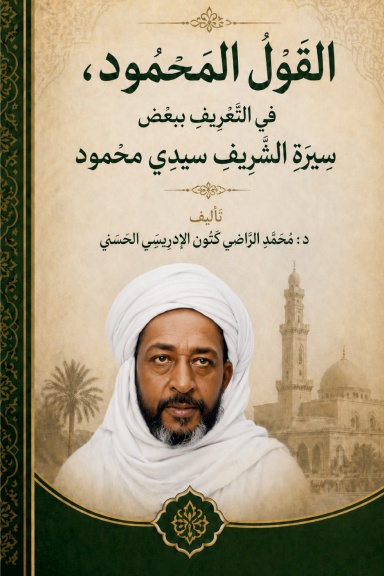
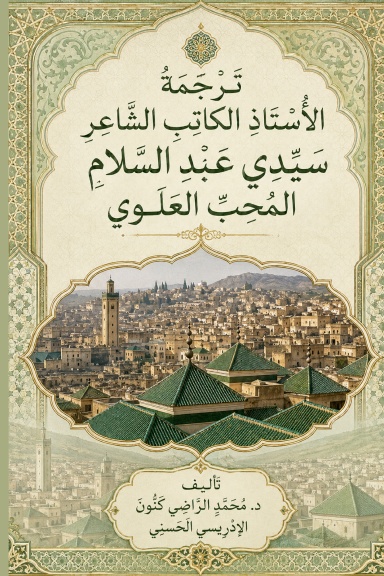
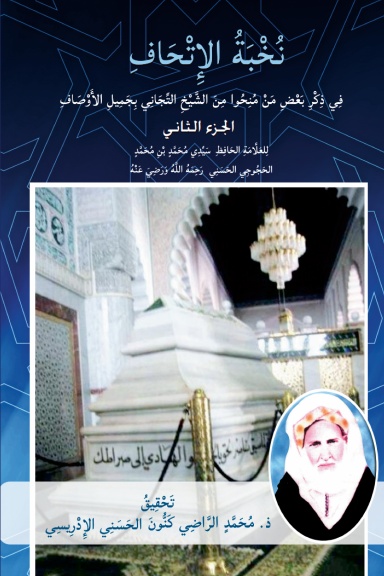
Skiredj Library of Tijani Studies
Discover the story behind the Skiredj Library of Tijani Studies: a scholarly trust, a family transmission, and a living digital catalogue preserving the written heritage of the Tijaniyya.
Our Work in Preserving the Heritage of the Tijani Scholars : The Story Behind the Skiredj Library of Tijani Studies: From a Sacred Trust to a Living Digital Catalogue
The Skiredj Library of Tijani Studies is more than a catalogue of books. It is the visible form of a long scholarly trust, a family transmission, and a labor of devotion carried across generations. On its official website, the project presents itself as a multilingual heritage platform gathering books, authors, articles, videos, and documentary resources in service of Tijani scholarship, and as a living gateway for reading, research, bibliographic tracing, and curated discovery. The digital library currently lists 154 works available in its online catalogue. (tijaniheritage.com)
To describe this library only as a database would therefore miss its true nature. It is also a story: the story of manuscripts preserved, entrusted, recovered, edited, translated, and carried into the present age through unusual fidelity and remarkable scholarly companionship.
A Library That Began as a Trust
At the heart of this story stands the heritage of the great Moroccan scholar and gnostic Sidi Ahmad ibn al-Hajj al-‘Ayyashi Skiredj. The present library explicitly identifies itself with his name and legacy, describing him as one of the foremost figures of Tijani scholarship, while the catalogue itself includes a vast body of works by him and by major authors of the Tijani tradition. (tijaniheritage.com)
Yet the story of this catalogue is not simply that old books survived. It is that they were kept deliberately, under the weight of a trust.
According to a family and scholarly transmission preserved around this corpus, the direct son of the famous scholar, the late Sidi Abdelkrim Skiredj, declared in his testament that before his death, his father had entrusted the books to him and told him to preserve them with great care because they were immensely precious. He was told that after fifty or sixty years, someone would come to reclaim them and work on them.
In this narrative, the books were not merely inherited objects. They were a waiting inheritance.
The Recovery of the Books
What followed is remembered as one of the most striking episodes in the modern history of this heritage.
After that long interval, Professor Sidi Mohamed Erradi Guennūn is said to have seen the scholar Skiredj in a dream instructing him to go to his son Kabir in Casablanca and take the books. At that time, the books were indeed in the care of Sidi Mohamed Kabir, grandson of Sidi Abdelkrim Skiredj and inheritor of the family trust.
The account further relates that on that very same night, Sidi Mohamed Kabir also saw his grandfather in a dream, warning him with unusual insistence that on the following day a sharif, a descendant of the Prophet, would come to him, and that he should receive him properly and give him what he sought.
The next morning, at an unusually early hour, Professor Guennūn came to his home.
This detail matters in the retelling because Sidi Mohamed Kabir was not an easily accessible man. He had served as Moroccan ambassador to Egypt and had studied for years alongside the late King Hassan II. Even within his own family, he was known for strict propriety and formal reserve. Yet when he opened the door that morning, he is remembered as embracing Professor Guennūn and saying, in effect, that since the death of his grandfather — when he himself was still young — he had never seen him again, and that through this visitor he had now seen him once more.
Soon after, a truck was called, and the books were transported to Rabat.
From Manuscripts to Scholarly Work
The catalogue now visible online belongs to a much longer editorial effort.
The official library presents itself not only as a shelf of titles, but as an organized environment for books, authors, series, biographies, translated works, and documentary discovery. The catalogue includes major Arabic works, translated works, biographical studies, defenses of the Tijani path, and several English titles dedicated to the beliefs, practices, and history of the Tijaniyya. (tijaniheritage.com)
But before that visible structure existed, there was an earlier stage marked by difficult labor. According to the transmitted account behind the project, Professor Guennūn worked for months amid a large mass of manuscripts, with very limited computing resources by the standards of the time. During that period of exhausting effort, he is said to have seen the scholar Skiredj again in a dream telling him not to worry, because he would send him his son.
What followed, in that same narrative, was the arrival into this story of the late Professor Sidi Ahmed ibn Abdallah Skiredj.
The Meeting of Two Men of Service
The online library makes clear that Professor Ahmed Ibn Abdallah Skiredj and Sidi Mohamed Erradi Guennūn are among the central scholarly custodians of the present project. The catalogue itself includes numerous translated works associated with Professor Ahmed Ibn Abdallah Skiredj, especially in French and English, while Sidi Mohamed Erradi Guennūn also appears as an author and editor in the library’s bibliographic structure. (tijaniheritage.com)
Within the family memory surrounding this project, the meeting between these two men is not described as accidental. Professor Ahmed ibn Abdallah Skiredj belonged to the Skiredj family line, had taken the Tijani path through his uncle Sidi Abderrahman Skiredj, brother of the great scholar, and had been raised from birth in love for his great-uncle Sidi Ahmad Skiredj. Even his first name, Ahmed, was remembered as a tribute to that illustrious scholar.
From that meeting onward, a long scientific and editorial journey began.
The project was no longer simply one of safeguarding old manuscripts. It became one of typing, editing, annotating, translating, publishing, and ultimately making this heritage available for the benefit of humanity.
That spirit can still be seen in the library today. The site is not arranged as a random commercial list, but as a curated heritage platform with collections, authors, translated works, biographical series, and documentary organization. (tijaniheritage.com)
A Catalogue That Represents a Mission
Today, the digital library describes itself as a gateway for research and bibliographic discovery, and the catalogue visibly spans several languages and thematic areas. The official page currently indicates 154 works available, while also organizing them by language, author, and series, including Arabic works, translated works, biographical studies, and English books dedicated to explaining the Tijani path to a wider readership. (tijaniheritage.com)
This matters because the Skiredj Library is not simply preserving one author. It is preserving an intellectual world.
A reader entering the catalogue does not find only devotional texts. One also finds:
foundational Tijani reference works,
biographical literature,
doctrinal clarifications,
works of defense,
correspondences,
scholarly journeys,
poetic literature,
translated manuals,
and modern explanatory books in English and French.
In that sense, the catalogue is not merely a list of titles. It is a map of a civilization of learning.
The Role of the Late Professor Ahmed Skiredj
The current catalogue makes the role of Professor Ahmed Ibn Abdallah Skiredj especially visible in the translated domain. The site lists his name on major French and English titles, including books on the Tijani path, its litanies, its mission, its jurisprudence, and the life of Shaykh Sīdī Aḥmad al-Tijānī. (tijaniheritage.com)
Within the transmitted account behind the project, before his passing he had already helped initiate the publication of more than 160 books related to the Tijani path. That number belongs to the broader editorial journey remembered by those closest to the project, even if the online catalogue now presents its own current count of available works in digital form. What matters most is the scale of the labor: the late professor did not merely translate texts. He helped convert a fragile manuscript inheritance into a readable, structured, and transmissible scholarly corpus.
That is one of the reasons this catalogue deserves to be read as a heritage achievement, not simply as inventory.
The Continuing Work of Professor Sidi Mohamed Erradi Guennūn
The official library also shows the lasting presence of Sidi Mohamed Erradi Guennūn as an author and scholarly contributor across multiple entries in the catalogue. (tijaniheritage.com)
In the story preserved around the project, he appears not only as an editor or bibliographer, but as the man who first recovered the entrusted books and then continued, with determination and self-effacement, the work of organizing and publishing them. After the passing of Professor Ahmed Skiredj, that mission did not stop. It continued.
This continuity is one of the most important things to understand about the catalogue. It is not a static memorial. It is a living scholarly undertaking.
Why This Catalogue Matters Beyond Its Community
For a search engine, a catalogue may appear at first as structured metadata. For a serious reader, however, the Skiredj Library is far more than that.
It matters because it brings together:
manuscript memory,
family transmission,
scholarly editing,
multilingual access,
and a coherent documentary vision of the Tijani tradition.
The official website’s own description confirms this larger ambition: it is a platform for reading, research, bibliographic tracing, and documentary discovery, not just a storefront or archive fragment. (tijaniheritage.com)
That is exactly the kind of signal that helps position a site as an encyclopedic reference platform rather than an isolated repository.
And this is why the story behind the catalogue is worth telling. It gives the library a human, scholarly, and historical depth that a bare list of titles could never communicate.
The Catalogue as a Living Continuation of a Prophetic Trust
Every great library has an origin story.
Some begin with royal patronage.Some with conquest.Some with private collectors.Some with universities.
This one, according to the account preserved by its custodians, began with a trust, a warning, a waiting period, two dreams, an early morning visit, and then years of scholarly labor carried by two men working side by side: Professor Sidi Mohamed Erradi Guennūn and the late Professor Ahmed ibn Abdallah Skiredj.
That is what gives the catalogue its unusual moral density.
It is not simply a list of books.It is the continuation of a charge.
Conclusion
The Skiredj Library of Tijani Studies should be understood not only as a digital catalogue, but as the visible result of a long scholarly and familial transmission. Its official platform now presents a multilingual documentary gateway with 154 works currently listed online, organized for reading, research, and bibliographic discovery. (tijaniheritage.com)
Behind that visible structure lies a deeper story: the preservation of precious books by the Skiredj family, the recovery of that trust through Professor Sidi Mohamed Erradi Guennūn, the decisive collaboration of the late Professor Ahmed ibn Abdallah Skiredj, and the long work of editing, translating, and publishing this heritage for wider benefit.
That is why this catalogue deserves to be read differently.
It is not only a catalogue of books.It is a catalogue of fidelity.
https://www.tijaniheritage.com/en/books