Algeria: one of the greatest lands of the Tijaniyya, intimately linked to its founder
Algeria occupies a central and foundational place in the history of the Tijaniyya. Just as Morocco is the land where Sīdī Aḥmad al-Tijānī رضي الله عنه passed away, where he is buried, and where the great mother-zawiya of Fez is located, Algeria is also a country profoundly and intimately connected to the founder of the path.
It is in Algeria that one finds Ain Madhi, the birthplace of Sīdī Aḥmad al-Tijānī. It is also in this land that several of his direct descendants lived before some of them later moved to Morocco, including Sidi Mahmud, son of Sidi Muhammad al-Bashir, son of Sidi Muhammad al-Habib, son of Sīdī Aḥmad al-Tijānī رضي الله عنه.
Algeria was also home to several direct companions of the Shaykh, as well as many of his spiritual heirs, disciples, muqaddams, and khalifas. They lived and spread the path in places such as:
Ain Madhi
Laghouat
Oued Souf
Sidi Bousemghoun
Oran
Temacine
and many others.
For this reason, Algeria is not merely one Tijani country among others. It is one of the oldest, deepest, and most structurally important homelands of the path.
Sidi Ahmed Skiredj and Algeria: a deep and enduring relationship
The scholar Sidi Ahmed Skiredj maintained a deep, constant, and many-sided relationship with Algeria. He paid two major visits to the country, during which he met some of its greatest scholars, jurists, muftis, muqaddams, and leading representatives of the path.
He answered their questions, exchanged views with them on doctrinal and educational matters, and played a major role in defending the Tariqa against the criticisms of his time. On several occasions, the khalifa of Temacine asked him to take charge of answering those who attacked the Tijaniyya through publications and written polemics.
This clearly shows that, in the eyes of Algerian scholars, Sidi Ahmed Skiredj was not a marginal outside correspondent. He was regarded as a major authority capable of defending the path with knowledge, argument, spiritual legitimacy, and literary mastery.
Western Algeria: a privileged space of exchange
The available materials show that western Algeria held a particularly important place in Sidi Ahmed Skiredj’s relations with the country, especially:
Tlemcen
Oran
Sidi Bel Abbès
Nedroma
This importance can be explained by two main factors. First, many of his friends, disciples, and admirers were concentrated in that region. Second, he visited it repeatedly.
It should also be recalled that during the 1920s Sidi Ahmed Skiredj was serving as chief judicial authority in Oujda and its surrounding region, a Moroccan city bordering Algeria. This geographical proximity made travel, correspondence, exchange, and the circulation of people and books especially easy.
A decisive contribution to the spread and defense of the path in Algeria
The letters exchanged between Sidi Ahmed Skiredj and the scholars of Algeria played a major role in spreading the Ahmadi Tijani path in that land. These letters carried substantial scholarly, literary, and spiritual weight, as well as a clear intellectual content.
They also served to defend the path against its opponents. A significant portion of this correspondence, especially what was connected to the Algerian newspaper al-Balagh, was devoted to refuting hostile attacks coming from anti-Sufi circles, including certain rigid and Salafi-oriented trends of the period.
In this sense, Sidi Ahmed Skiredj’s action toward Algeria was at once:
pedagogical
doctrinal
spiritual
and polemical in the noble sense, that is, devoted to clarification and defense of the truth.
Entire works directed toward the Algerian context
A considerable number of Sidi Ahmed Skiredj’s writings composed in refutation of opponents were directly tied to the Algerian context. Among them were:
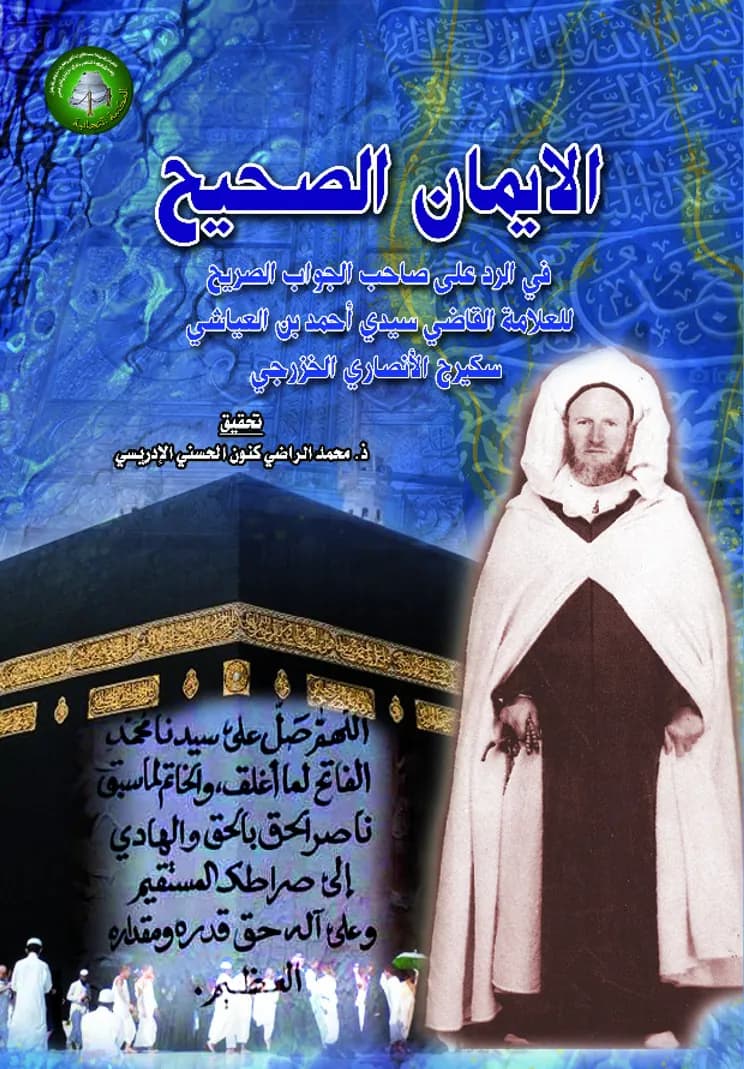
al-Iman al-Sahih, written in response to the author of al-Jawab al-Sarih, in connection with controversies surrounding ‘Abd al-Hamid Ben Badis
‘Iqd al-Marjan, addressed to Shaykh Muhammad ibn Sulayman
Tanbih al-Ikhwan, concerning the necessity of a valid authorization for transmitting the Tijaniyya and the invalidity of taking it from someone who transmits another path alongside it.
The latter two works were directed to al-Shaykh Muhammad ibn Sulayman al-Nadrumi, showing how central Algerian debates were to Sidi Ahmed Skiredj’s intellectual concerns.
Algeria in his travel writing, public talks, and reflections
Algeria occupies an important place in Sidi Ahmed Skiredj’s travel accounts, notes, and public discourses. Among the writings linked to this country are:
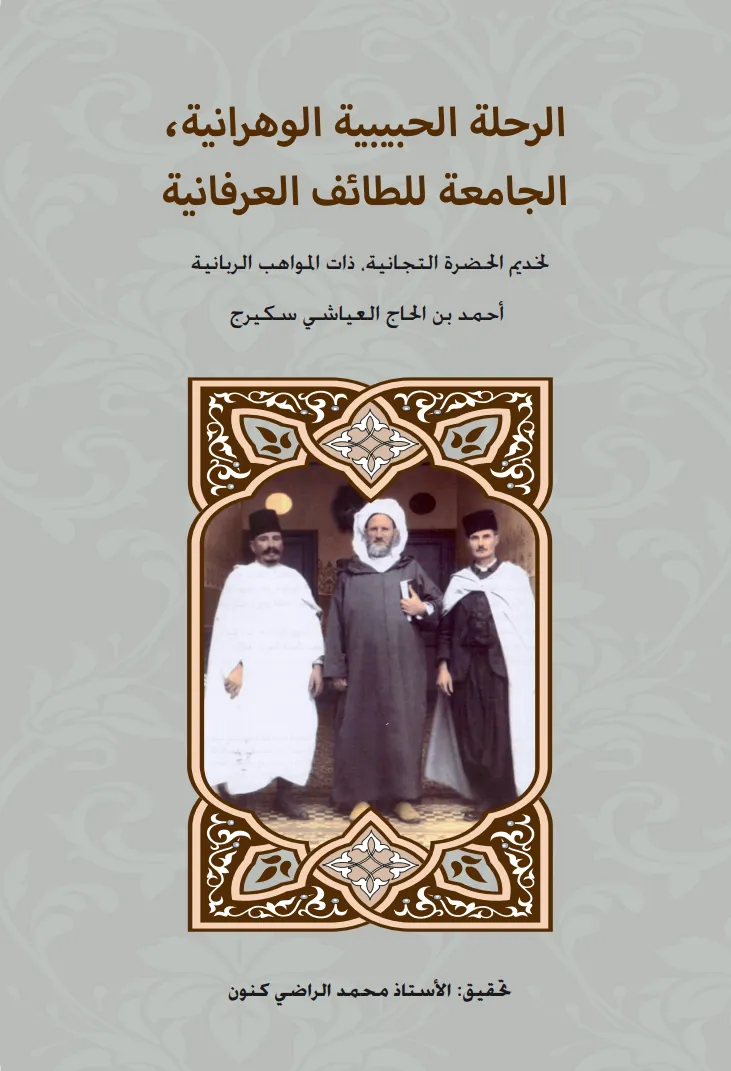
al-Rihla al-Habibiyya al-Wahraniyya
Shahd al-Adhhan, on what he saw in Oran, Mostaganem, Sidi Bel Abbès, and Tlemcen
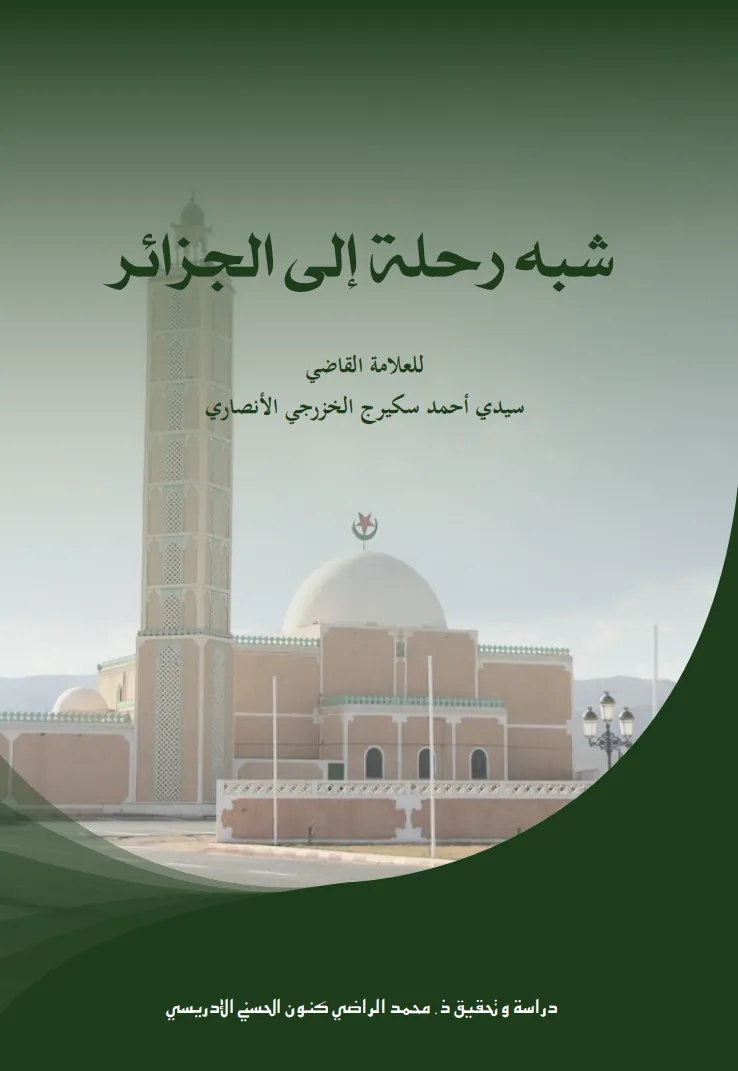
Shibh Rihla ila al-Jaza’ir
al-Ightibat bi al-Jawab ‘an al-As’ila al-Warida ‘alayna min al-Aghwat
and several musamarat, including the address he delivered at Nadi al-Taraqqi in Algiers at the request of its president Ahmad Tawfiq al-Madani, which he titled:Hadiyyat al-Za’ir li Nadi al-Taraqqi bi al-Jaza’ir.
These writings show that Algeria was not a mere passing scene in the life of Sidi Ahmed Skiredj. It was a true field of reflection, encounter, writing, and engagement.
Ain Madhi, the descendants of the Shaykh, and Sidi Ahmed Skiredj
Ain Madhi remained strongly present in the writings and notes of Sidi Ahmed Skiredj. He maintained close ties with the noble descendants of the Shaykh who lived there, as well as with other members of the Tijani family elsewhere in Algeria.
Among them was Sidi Mahmud ibn Sidi Muhammad al-Bashir al-Tijani, born in Ain Madhi in 1297 AH, who later assumed the khilafa after the death of his brother Sidi Muhammad al-Kabir. Sidi Ahmed Skiredj devoted a separate work to him entitled:
Ghayat al-Maqsud bi al-Rihla ma‘a Sidi Mahmud
That alone is enough to show the special importance he attached to him.
There was even a letter from the former sultan Moulay Abd al-Hafid asking Sidi Ahmed Skiredj about the spiritual rank and station of Sidi Mahmud. In reply, Sidi Ahmed Skiredj described him as being of a malamati character in the path, and added that he had witnessed in him states that only those who surrender fully to the people of God can bear and understand.
Temacine and the descendants of Sidi ‘Ali al-Tamassini
Sidi Ahmed Skiredj also maintained close relations with the descendants of Sidi ‘Ali ibn ‘Isa al-Tamassini رضي الله عنه, one of the greatest companions of Sīdī Aḥmad al-Tijānī.
He showed great care for this noble lineage, and whenever one of them came to Morocco he made a point of meeting and honoring them. He recorded many such meetings in his books and notebooks.
A good example is the letter of Sidi ‘Ali ibn Muhammad al-‘Id al-Tamassini, in which he expresses his longing to meet Sidi Ahmed Skiredj and converse with him about the awrad and asrar associated with the Shaykh. This clearly shows the esteem in which the people of Temacine held him and their recognition of his role in preserving the teachings and inner meanings of the path.
Algerian muftis and scholars in regular correspondence with him
A number of Algerian scholars and muftis remained in regular contact with Sidi Ahmed Skiredj. Among them were:
Fakhar Mustafa, mufti of Médéa
al-Habib ibn ‘Abd al-Malik, mufti of Oran, one of its leading scholars and a Tijani muqaddam.
As for al-Habib ibn ‘Abd al-Malik, he shared a strong and longstanding friendship with Sidi Ahmed Skiredj. It was he who invited him to Oran in 1329 AH / 1911, and Sidi Ahmed Skiredj accepted the invitation. From that visit came the famous:
al-Rihla al-Habibiyya al-Wahraniyya
to which he later added a supplement mentioning many of the scholars, muqaddams, and notable men of the city and region whom he had met.
Their correspondence also reveals the intensity of the exchange of books, projects, visits, and matters related to the path and its people.
Algeria: a land of lineage, companionship, scholarship, and doctrinal struggle
The Algerian example shows that the Tijaniyya there was far more than a devotional practice. It rested upon a solid set of foundations, including:
the Shaykh’s own lineage and birthplace
the presence of his noble descendants
the legacy of his direct companions
historic zawiyas
scholars and muftis
learned correspondence
and doctrinal responses to opponents and critics.
In all of this, Sidi Ahmed Skiredj was one of the foremost figures who served the path in Algeria through travel, correspondence, writing, defense, and by strengthening the links between its major branches and learned representatives.
Conclusion
Algeria is one of the greatest countries of the Tijaniyya. It is tied directly to Sīdī Aḥmad al-Tijānī through his birthplace, his family line, his companions, its historic zawiyas, and its enduring scholarly and spiritual legacy.
The close ties between Algeria’s scholars, muftis, khalifas, descendants of the Shaykh, and Sidi Ahmed Skiredj fully confirm this exceptional position. Through his travels, writings, answers, refutations, gatherings, and correspondence, he played a major role in consolidating, defending, and illustrating the Tijaniyya in Algeria.
Linked figures
(0)Linked books
(0)Linked articles
(0)Bibliographic references
(3)These references are explicitly associated with this region in the documentary world map materials.